
Vietnam’s cashew exports in 2025 marked a historic milestone, surpassing the $5 billion mark for the first time. This achievement not only affirms Vietnam’s position on the global cashew map but also demonstrates significant shifts in market, technology, and development direction for the entire industry.
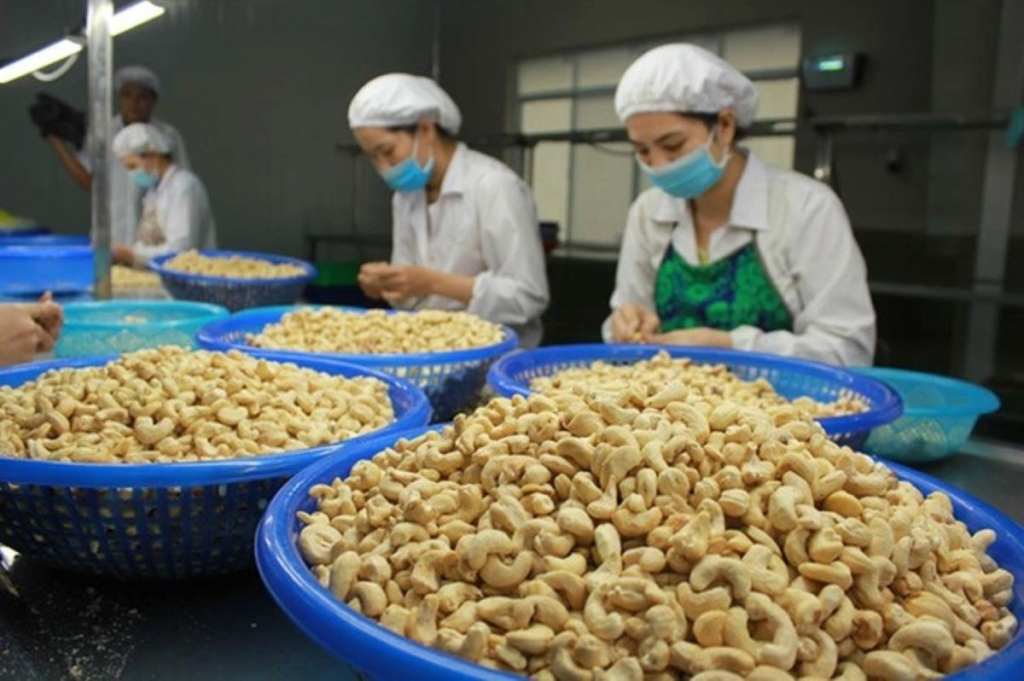
According to data from Vietnam Customs, in December 2025, cashew exports reached US$466 million, a 29% increase compared to the same period last year. This impressive surge in the final month of the year has brought the total value of cashew exports for the whole year 2025 to US$5.229 billion – the highest level ever.
ESTABLISHING EXPORT RECORDS IN BOTH VOLUME AND VALUE
Previously, in 2024, Vietnam’s cashew exports surpassed the $4 billion mark for the first time, reaching over $4.3 billion. Thus, in just two consecutive years, the cashew industry has set two new records in export value, with an increase of nearly $1 billion in just one year.
Not only will cashew exports reach a peak in value, but 2025 will also set a new record in volume, reaching 766,585 tons, a 5.7% increase compared to 2024. This shows that the industry’s growth comes not only from price, but also from processing capacity and the ability to expand consumer markets.
With this result, cashew nuts have risen to become Vietnam’s third largest agricultural export item in 2025, behind only coffee (US$8.57 billion) and fruits and vegetables (US$8.56 billion). In the context of a sharp decline in rice exports, the breakthrough of cashew nuts further demonstrates the increasingly important role of this commodity in the structure of agricultural exports.
One of the most notable highlights of the cashew export landscape in 2025 is the dramatic shift in market structure. For the first time in history, China has surpassed the United States to become Vietnam’s largest cashew consumer market.
Specifically, in 2025, cashew exports to China are projected to reach $1.115 billion, while exports to the US will reach $975 million. The Netherlands will rank third with $495 million in export value.
According to the Import-Export Department (Ministry of Industry and Trade), in the first 11 months of 2025 alone, Vietnam exported 159.2 thousand tons of cashew nuts to China, worth US$1.024 billion, an increase of 35.5% in volume and nearly 49% in value compared to the same period in 2024. This is the first time cashew nut exports to the Chinese market have exceeded US$1 billion, while the previous highest level was only US$746 million in 2024.
The strong surge in the Chinese market effectively offset the decline in the US market. In the first 11 months of 2025, cashew exports to the US decreased by 26% in volume and 17% in value, reaching only 133,000 tons with a turnover of $887 million. Nevertheless, thanks to high growth in China and several other markets, Vietnam’s cashew exports maintained positive growth momentum throughout the year.
TECHNOLOGICAL EFFORTS AND THE “ACHILLES’ HEEL” OF RAW MATERIALS
Despite achieving record export figures, Vietnam’s cashew industry remains a large-scale processing industry heavily reliant on imported raw materials. In 2025, Vietnam spent up to $4.5 billion to import more than 2.9 million tons of raw cashews, mainly from Africa and Cambodia. With export revenue reaching $5.229 billion, the trade surplus for the entire industry was only over $700 million.
According to the Vietnam Cashew Association (VINACAS), the current achievements are the culmination of a persistent transformation, from social welfare goals to the development of a multi-billion dollar processing industry. Technological advancements are considered a key factor in helping the Vietnamese cashew industry maintain its position as the world’s number one in cashew processing and export.
Following national science and technology projects on the development of automatic shelling machines in the 2010-2011 period, the cashew industry has gradually moved away from manual labor, increasing productivity, reducing costs, and meeting the stringent standards of demanding markets such as the EU and Japan.
However, the biggest “Achilles’ heel” of the cashew industry today remains its almost complete dependence on imported raw materials. Domestic supply only meets about 10% of production needs, making the cashew industry vulnerable to price fluctuations and global supply risks.
To address the raw material shortage, in 2026, VINACAS, along with relevant ministries and agencies, plans to accelerate the strategy of restoring and developing raw material areas in the Central Highlands and Southeast Vietnam. Programs for replanting high-yield cashew varieties, along with proposals to tighten technical barriers to imported cashews, are expected to create a fundamental shift for the industry.
In addition, the Ministry of Agriculture and Environment has identified key areas for actively implementing solutions to ensure product transparency, digital data traceability, investment in deep processing, and the development of a national brand for the cashew industry.
According to VINACAS’ forecast, the global cashew market will grow at an average rate of 4.6% per year during the period 2022–2027, thanks to the growing trend of consuming healthy foods and nutritious nuts. This is considered a crucial area for the Vietnamese cashew industry to continue its breakthrough, not only in terms of export scale but also in terms of added value.
“The goal for the cashew industry in the coming period is not just to reach $5 billion, but to enhance value, develop deeply processed products, build a national brand, and affirm the sustainable position of Vietnamese cashews in the world market,” emphasized the VINACAS leader.
